Author Emily Jenkins loves to play with words, so it's not surprising that she's long been a fan of the picture books written by Ruth Krauss. Among Jenkins' favorites are Krauss' A Very Special House and I Want to Paint My Bathroom Blue (both illustrated by Maurice Sendak). One favorite verse, from I Want to Paint My Bathroom Blue, goes like this:
"I'll make a big white door
with a little pink doorknob --
and a song about the doorknob goes
a doorknob a doorknob
a dear little doorknob
a dearknob a dearknob
a door little dearknob...."
In fact, it was that "dearknob" verse that Jenkins was chanting with her two daughters one day when they were taking a walk. "And then at one point, we saw a greyhound, and I started playing with the rhythm using the word 'greyhound,'" Jenkins told a crowd gathered at my library recently after reading her newest picture book, A Greyhound, A Groundhog. "The book really came from that rhythm and those sounds before it came from any characters."
In A Greyhound, A Groundhog, Jenkins uses just a few words, but plays with them to create a story that is both whimsical and action-packed, and is totally fun to read aloud. Here's an example: “A round hound, a grey dog, a round little hound dog. / A greyhog, a ground dog, a hog little hound dog”. The lively watercolor illustrations by Chris Appelhans perfectly match Jenkins' text, making A Greyhound, A Groundhog "a feast for the eyes and ears," Kirkus put it. The book already has won great critical praise, include five starred reviews.
Jenkins came to my library, as part of our partnership with Politics & Prose Bookstore, to promote A Greyhound, A Groundhog. During the program, Jenkins also read and talked about two other recent picture books she's written: Toys Meet Snow, published in 2015 and illustrated by Caldecott Medalist Paul O. Zelinsky, and another just-published book, Princessland, which features artwork by Yoko Tanaka.
Toys Meet Snow is the first picture book that connects with the popular Toys Go Out chapter book trilogy written by Jenkins and also illustrated by Zelinsky. The books highlight the adventures of an unlikely trio of toys -- StingRay and Lumphy the buffalo, both plush toys, plus Plastic, a red rubber ball. Jenkins said at the library program that that there likely will be another Toys picture book in the next couple of years, although there are no plans for any further chapter books.
Meanwhile, in Princessland, Jenkins said that she was trying to both recognize the princess craze that many young kids, especially girls, go through while also pushing the boundaries a bit. "I like a good princess as much as the next person," Jenkins said with a grin. "...they're just fun! However, when my daughters were in their intense princess phase, I was always looking for what I would call 'feminist' princess books."
So, in Princessland, the main character, a girl named Romy, complains one day of being bored and wanting to be in "Princessland." Romy heads outside, accompanied by her talking cat, who asks her what Princessland is actually like. As Romy explains that, for example, the princesses can look out of their tall castles and see for miles, the cat leads her up a tree where -- yes -- she can see for miles. And so it goes, as Romy comes to understand that all of the things that she likes best about Princessland are actually in her own world, if she chooses to see them. Jenkins' story makes a point, but is never heavy-handed, while Tanako's colorful illustrations have plenty of glitzy details to satisfy young princess fans.
While Jenkins was focused on picture books in the recent program, she is a multi-talented writer who also writes chapter books for kids ages 7-10. In addition, using the nom de plume E. Lockhart, she's the author of several young adult novels. As a child, Jenkins always wanted to be a writer, but that changed in high school and college, when she became enamored of theater. Still, Jenkins ended up majoring in English, and then earned a master's and finally a doctorate in English literature.
It was while she was finishing her doctorate that Jenkins realized that what she really wanted to do was write. Over the years, she has published 44 books, which she characterized to the library audience this way: "Four books are for babies, 19 are picture books, 10 are young middle grade, nine are young adult, and two are for grown-ups. I wrote those two a long time ago, before I realized that I'd much rather write for kids."
For chapter book readers, Jenkins writes the Invisible Inkling series, and is one of three authors of the Upside-Down Magic series. (The other two authors are Sarah Mlynowski and Lauren Myracle. ) And, as young adult author E. Lockhart, Jenkins has won acclaim for such books as We Were Liars and The Disreputable History of Frankie Landau-Banks, which was a National Book Award finalist. Asked at the program if she likes to write for young adults, Jenkins replied that "writing for teenagers is being in an angst place -- a place of humiliation, a place of longing, a place of fury, a place of rejection of your family of origin.
"Even in comedies, it's still a fraught place to be. So I don't want to be there all the time. I don't want to spend all my life in that head-space. Sometimes I just want to be in the Upside-Down Magic headspace!"
END NOTES: Thanks to Emily Jenkins for a wonderful library program. Thanks to Kathy Dunn and the other Penguin Random House folks for sending her to my library. Thanks to Politics & Prose for our great partnership. And thanks to Bruce Guthrie for taking great photos of the event!
Showing posts with label e. lockhart. Show all posts
Sunday, February 19, 2017
Saturday, June 21, 2014
Book Reviews: Two Stellar Teen Novels
Reading novels written for teens -- what we call "YA" or young adult literature -- isn't easy for me. Don't get me wrong: I think there are some amazing YA books being written, and that YA writers can easily compete with the best adult writers out there. And I'm certainly not just talking about the ultra-popular John Green, but writers like Libba Bray, Walter Dean Myers, Elizabeth Wein, Rainbow Rowell, Meg Medina, David Levithan, Andrew Smith and many, many others.
No, my problem isn't with the writing or the writers of YA lit. My problem is this: YA books can be so compelling and so emotionally fraught that I sometimes just have to work up the courage and energy to dive into them. Once I start a well-written YA book, I know that it's going to take over some of my interior life and most likely leave some traces of itself behind, and I have to be ready --no, steel myself -- for that. I can hear you thinking: 'Well, isn't that the mark of a good book? Aren't good books for any age -- not just teens -- like that as well?" To respond: yes, it's definitely the mark of a good book. It's true that middle grade novels (those books for ages 7-12) and even picture books also can be memorably heart-wrenching. I find it hard, for example, to stay dry-eyed through A Ball for Daisy, the 2012 Caldecott Medal winner written and illustrated by Chris Raschka. But YA books offer a particularly intense reading experience for me, perhaps because the teen years are such an intense time, something the books naturally reflect. Not many adults I know would willingly relive the emotional heartache and confusion of their teen years, yet putting that heartache and confusion in the spotlight and trying to figure out how to deal with them is the core of the best YA novels.
So, this is all to say that it takes me quite a while to get into the groove of reading YA fiction. Once I'm there, however, I remember why I like reading teen books so much. The two teen novels spotlighted in this blogpost are perfect examples. Both authors, John Corey Whaley and e. lockhart, are award-winning writers who explore the deepest corners of the soul in their teen novels, yet also create characters and plots that keep readers turning the pages.
Let's start with Noggin (Atheneum, $17.99, ages 14 up), John Corey Whaley's second book. Fans of YA lit know that it's a big deal to win the Michael Printz Award, given annually by the American Library Association to the best novel for teens. (In fact, I've heard the Printz referred to as the "Newbery Medal for teens."). Whaley's first novel, Where Things Come Back, not only won the 2012 Printz but also the William Morris Award, given annually to the best teen debut novel. So Whaley immediately became a writer to watch, and with good reason: "Where Things Come Back" is just a marvelous book.
Because of this, I was predisposed to like Whaley's newest book, Noggin, despite the rather ghoulish (to me, at least) premise. The gist: Teenager Travis Coates, who is dying of cancer, agrees to participate in an experiment in which his head, free from the disease, will be surgically removed, carefully stored in a cryogenics lab, and -- if all goes well -- attached to another torso sometime in the future. In other words, Travis will be able to come back to life, albeit with his head attached to someone else's torso. Travis, a wise-cracking teen to the end, decides it's worth trying, given that he's dying anyway. Five years later, Travis wakes up to find that the experiment actually has worked and that he's been literally resurrected from the dead. Here's the book's opening paragraph: "Listen -- I was alive once and then I wasn't. Simple as that. Now I'm alive again. The in-between part is still a little fuzzy, but I can tell you that, at some point or another, my head got chopped off and shoved into a freezer in Denver, Colorado."
But there's a catch -- a big one -- to Travis' resurrected life; for, while Travis was in the deep freeze for those years, everyone else has moved on. Travis is still 16 and still in high school, but his friends are now in college and of legal drinking age. His girlfriend is engaged to someone else, and his best friend struggles to bridge the age gap. Everything and everyone is somewhat familiar but also somehow changed, especially Travis' parents, who are both thrilled and somewhat puzzled to have their son come back to life. Travis, meanwhile, is despondent at going back to the same high school, but fortunately makes a new friend named Hatton who makes it at least bearable. Overall, the resurrected Travis has one goal: to convince his old girlfriend Cate to ditch her fiance. (This book trailer for Noggin gives you a taste of the story.)
The idea behind Noggin is terrifying and fascinating, as Whaley makes us think about what we would do if faced with Travis' challenge to adjust to an entirely new body while trying to pick up the pieces of his old life. Travis himself is a hugely appealing character, someone who is astonished to be given back his life even as he wonders why. Through it all, Travis somehow maintains his sense of humor and even his snark. In Noggin, Whaley proves himself, once again, to be a heckuva writer as he takes a wild premise and turns it into a book that plumbs the depths of what exactly a life is worth. Overall, I'd put my money on Noggin as a top contender for the 2015 Printz Award. It's definitely one of THE teen novels of the year.
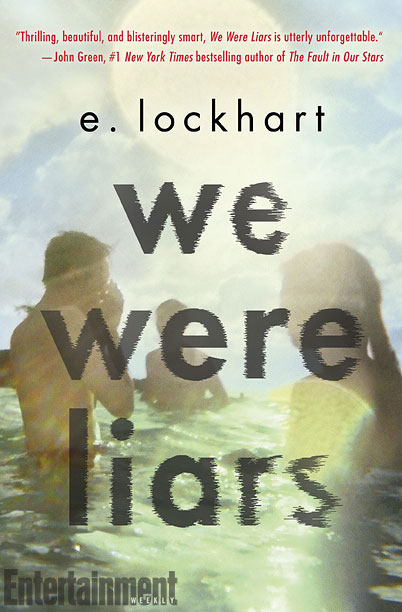
For something completely different, but just as good, try We Were Liars (Delacorte, $17.99, ages 14 up), the newest novel by e. lockhart. I'm a fan of lockhart's novels, particularly The Disreputable History of Frankie Landau-Banks, which won a 2009 Printz Honor and was a finalist for the National Book Award. In her latest book, lockhart masterfully blends memory and reality to create a gut-wrenching look at love and loss. The narrator is Cadence -- Cady for short -- who is part of the glamorous Sinclair family, famed for their looks and their money. (It's a family that will be reminiscent of the Kennedys for some readers, especially because of the book's Massachusetts setting).
Cady is the only child of Penny, one of three daughters (Carrie and Bess are the others) of Tipper and Harris Sinclair, the family's matriarch and patriarch. Each summer all of the Sinclairs gather on their own island, near Martha's Vineyard, where each family has their own house. For as long as she can remember, Cady has been part of a group of four each summer, including her two cousins, Johnny and Mirren, and Gat Patil, a friend of Johnny's and the nephew, by marriage, of Carrie Sinclair. As children, the quartet -- they call themselves the "Liars" -- revel in the endless days of sun and surf, but everything changes the summer that Cady is 15. That's the summer that she and Gat fall in love, and the summer that tragedy strikes.
It's difficult to say more about the story without giving away the shocking plot twist by which lockhart creates a story within a story. Suffice to say that her writing is hypnotic as she pulls readers along, along like the waves of the beach, with her into the dark heart of a family. For example, here's some of the opening chapter of We Were Liars:
"Welcome to the beautiful Sinclair family.
No one is a criminal.
No one is an addict.
No one is a failure.
The Sinclairs are athletic, tall, and handsome. We are old-money Democrats. Our smiles are wide, our chins square, and our tennis serves aggressive.
It doesn't matter if divorce shreds the muscles of our hearts so that they will hardly beat without a struggle. It doesn't matter if trust-fund money is running out; if credit card bills go unpaid on the kitchen counter. It doesn't matter if there's a cluster of pill bottles on the bedside table.
It doesn't matter if one of us is desperately, desperately in love.
So much
in love
that equally desperate measures
must be taken. "
As lockhart pulls us into Cady's story, the ground seems to shift under our feet. We keep reading because it's impossible -- impossible! -- not to keep reading, to follow Cady into what we are sure is some kind of tragedy. lockhart's impeccable pacing, as well as Cady's magnetic presence, compels us to keep moving through the book, to find out what exactly is happening and has happened to Cady. We Were Liars isn't an easy book to read, but it's an important book to read because it really makes readers think deeply about family ties, truth-telling, and the nature of love.
(Review based on copies of Noggin and We Were Liars received from the publishers).
No, my problem isn't with the writing or the writers of YA lit. My problem is this: YA books can be so compelling and so emotionally fraught that I sometimes just have to work up the courage and energy to dive into them. Once I start a well-written YA book, I know that it's going to take over some of my interior life and most likely leave some traces of itself behind, and I have to be ready --no, steel myself -- for that. I can hear you thinking: 'Well, isn't that the mark of a good book? Aren't good books for any age -- not just teens -- like that as well?" To respond: yes, it's definitely the mark of a good book. It's true that middle grade novels (those books for ages 7-12) and even picture books also can be memorably heart-wrenching. I find it hard, for example, to stay dry-eyed through A Ball for Daisy, the 2012 Caldecott Medal winner written and illustrated by Chris Raschka. But YA books offer a particularly intense reading experience for me, perhaps because the teen years are such an intense time, something the books naturally reflect. Not many adults I know would willingly relive the emotional heartache and confusion of their teen years, yet putting that heartache and confusion in the spotlight and trying to figure out how to deal with them is the core of the best YA novels.
So, this is all to say that it takes me quite a while to get into the groove of reading YA fiction. Once I'm there, however, I remember why I like reading teen books so much. The two teen novels spotlighted in this blogpost are perfect examples. Both authors, John Corey Whaley and e. lockhart, are award-winning writers who explore the deepest corners of the soul in their teen novels, yet also create characters and plots that keep readers turning the pages.
| John Corey Whaley |
But there's a catch -- a big one -- to Travis' resurrected life; for, while Travis was in the deep freeze for those years, everyone else has moved on. Travis is still 16 and still in high school, but his friends are now in college and of legal drinking age. His girlfriend is engaged to someone else, and his best friend struggles to bridge the age gap. Everything and everyone is somewhat familiar but also somehow changed, especially Travis' parents, who are both thrilled and somewhat puzzled to have their son come back to life. Travis, meanwhile, is despondent at going back to the same high school, but fortunately makes a new friend named Hatton who makes it at least bearable. Overall, the resurrected Travis has one goal: to convince his old girlfriend Cate to ditch her fiance. (This book trailer for Noggin gives you a taste of the story.)
The idea behind Noggin is terrifying and fascinating, as Whaley makes us think about what we would do if faced with Travis' challenge to adjust to an entirely new body while trying to pick up the pieces of his old life. Travis himself is a hugely appealing character, someone who is astonished to be given back his life even as he wonders why. Through it all, Travis somehow maintains his sense of humor and even his snark. In Noggin, Whaley proves himself, once again, to be a heckuva writer as he takes a wild premise and turns it into a book that plumbs the depths of what exactly a life is worth. Overall, I'd put my money on Noggin as a top contender for the 2015 Printz Award. It's definitely one of THE teen novels of the year.
For something completely different, but just as good, try We Were Liars (Delacorte, $17.99, ages 14 up), the newest novel by e. lockhart. I'm a fan of lockhart's novels, particularly The Disreputable History of Frankie Landau-Banks, which won a 2009 Printz Honor and was a finalist for the National Book Award. In her latest book, lockhart masterfully blends memory and reality to create a gut-wrenching look at love and loss. The narrator is Cadence -- Cady for short -- who is part of the glamorous Sinclair family, famed for their looks and their money. (It's a family that will be reminiscent of the Kennedys for some readers, especially because of the book's Massachusetts setting).
Cady is the only child of Penny, one of three daughters (Carrie and Bess are the others) of Tipper and Harris Sinclair, the family's matriarch and patriarch. Each summer all of the Sinclairs gather on their own island, near Martha's Vineyard, where each family has their own house. For as long as she can remember, Cady has been part of a group of four each summer, including her two cousins, Johnny and Mirren, and Gat Patil, a friend of Johnny's and the nephew, by marriage, of Carrie Sinclair. As children, the quartet -- they call themselves the "Liars" -- revel in the endless days of sun and surf, but everything changes the summer that Cady is 15. That's the summer that she and Gat fall in love, and the summer that tragedy strikes.
| e. lockhart |
It's difficult to say more about the story without giving away the shocking plot twist by which lockhart creates a story within a story. Suffice to say that her writing is hypnotic as she pulls readers along, along like the waves of the beach, with her into the dark heart of a family. For example, here's some of the opening chapter of We Were Liars:
"Welcome to the beautiful Sinclair family.
No one is a criminal.
No one is an addict.
No one is a failure.
The Sinclairs are athletic, tall, and handsome. We are old-money Democrats. Our smiles are wide, our chins square, and our tennis serves aggressive.
It doesn't matter if divorce shreds the muscles of our hearts so that they will hardly beat without a struggle. It doesn't matter if trust-fund money is running out; if credit card bills go unpaid on the kitchen counter. It doesn't matter if there's a cluster of pill bottles on the bedside table.
It doesn't matter if one of us is desperately, desperately in love.
So much
in love
that equally desperate measures
must be taken. "
As lockhart pulls us into Cady's story, the ground seems to shift under our feet. We keep reading because it's impossible -- impossible! -- not to keep reading, to follow Cady into what we are sure is some kind of tragedy. lockhart's impeccable pacing, as well as Cady's magnetic presence, compels us to keep moving through the book, to find out what exactly is happening and has happened to Cady. We Were Liars isn't an easy book to read, but it's an important book to read because it really makes readers think deeply about family ties, truth-telling, and the nature of love.
(Review based on copies of Noggin and We Were Liars received from the publishers).
Subscribe to:
Posts (Atom)