Showing posts with label tales from the library. Show all posts

Friday, March 14, 2014

Tales From the Library: Novel Concerns

Recently, a patron called me to ask for recommendations for her mother-daughter book club in which the young participants are third-graders, most around nine years old. This patron and her daughter, a voracious reader, had suggested “Island of the Blue Dolphins” by Scott O’Dell as their pick for the club. The patron told me that her daughter loved the book and wanted to share it with her friends.

But another mother in the club objected, saying that she had read on Common Sense Media that Karana, the main character, in “Island of the Blue Dolphins,” witnesses the deaths of her father and brother, and that the book contained a fair amount of violence. This mother felt that would be too much for her daughter and asked that the club read another book.
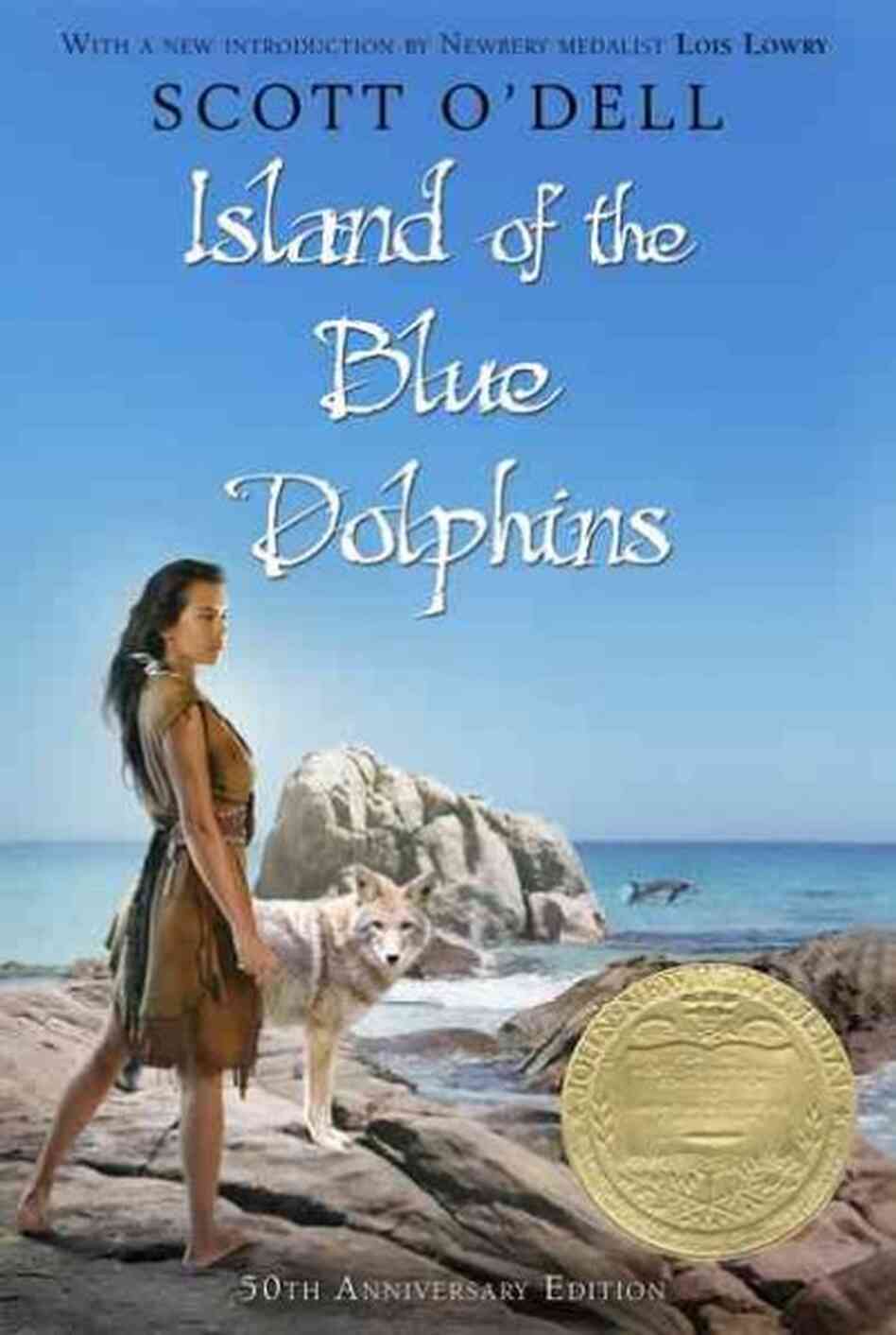
The patron who called me was frustrated by the situation and also concerned, as it seemed that the other mother’s concerns could greatly circumscribe the club’s reading. We talked about the “dead parent syndrome” in children’s books, so many of which feature at least one dead parent, which allows kids to be more adventurous. But she wasn’t sure that her mother-daughter book club would be able to read even classic books in which one parent was dead (“The Penderwicks” by Jeanne Birdsall as a recent example). “I know that kids mature at different ages and that can be hard,” the patron said to me. The patron added that she had talked to her daughter about the issue and that her daughter said, “Mom, I know that people die. That’s sad. But I just read those parts and move on.” Clearly, the patron said, her daughter is at a different place than the other mother’s child, but everyone in the club – both mothers and daughters – are good friends and so they really want to try to accommodate each other.

So the patron decided to call me, and ask for recommendations that might work for everyone. I’ve had this type of situation occur before, with parents asking for “gentle” fiction that contains no elements likely to upset their children. It can be extremely tricky terrain for a librarian to navigate, as every parent/child combination is likely to consider different elements as “upsetting.” For some, there can be no deaths that occur (I even had one mother tell me that she was reading “Charlotte’s Web” to her three-year-old child. (!) When I asked how she was going to explain Charlotte’s death to her child, the mother said that she was going to change the ending to a “happy” one where Charlotte lives. Aaarrrgh!) For others, the concern focuses on violence, which most likely means no fairy tales or graphic novels. Even our library's “all ages” comics, for example, usually have some kind of cartoonish violence. (If it’s the violence is more realistic, we put the graphic novel in our “older readers” section as a way of signaling that to parents).

 Certainly I believe that parents have the right to determine what their children read (although I also believe that parents should work to transfer that right to their children as the kids mature). With that parental right, however, comes a responsibility to ensure that you, as a parent, aren’t needlessly limiting your child’s ability to read books that may important for them to read. Fairy tales are a good example of this, with the classic thinking (Bruno Bettelheim, et al) that the violence in these classic tales (Red Riding Hood’s grandmother eaten by a wolf, Hansel and Gretel left in a forest by their father) can actually help kids work out some of their fears.

Full disclosure: I have to acknowledge that it wasn’t easy for me as a parent to refrain from trying to “protect” my kids from books that might upset them. One of my children had major sleep issues and so I thought that by limiting her reading of books with “upsetting” elements, I was helping her. My wise pediatrician, however, eventually convinced me that I couldn’t – and shouldn’t – try to sanitize the world for my daughter, and that it truly might be helpful for her to read about death and violence in a children’s book and see how the characters worked it out, and think about how she herself might work it out. By letting her read books with “upsetting” elements like death and violence, I was giving her some of the tools needed to function in the real world. Today she’s a well-adjusted 23-year-old, and I give some of the credit to the books she read as a child and teen.

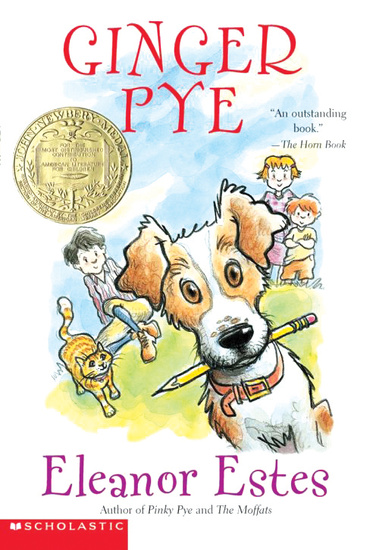
Two other things: First, I recognize that my daughter was lucky that she grew up in a stable environment, emotionally and economically. Not every child is so fortunate, and books with death and violence may actually mirror their own experiences, not be something just to read about in a book. They may not have a choice of knowing about death and violence at young age. Second, remember that we are talking about children’s books! Even if there is a death in the book – often offstage, before the story begins, as in books like “The Saturdays” by Elizabeth Enright -- or some violence, like the way the title, canine character is stolen by some ne-er-do-wells in “Ginger Pye” by Eleanor Estes – these are children’s stories, and there will be a happy ending, at least of sorts.
 With all of this in mind, I came up with a list of possible books for the patron to suggest to her mother-daughter book club. They were specifically looking for fiction, so I didn’t include non-fiction or graphic novels – although I did include “Ellie McDoodle,” a “hybrid” book that features a mix of words and illustrations. Many of these books feature some element that might be considered upsetting by some parents (i.e. the divorced parents in “Flora & Ulysses” and the mostly unrepentant behavior displayed by the title character in “Harriet the Spy.”) I had a tight deadline to develop the list, which is by no means exhaustive, and so would love to hear more suggestions from others! This is an issue that comes up regularly for both parents and librarians, and it’s always good to be armed with recommendations. Meanwhile, here's my start at such a list:
__ "The True Blue Scouts of Sugar Man Swamp" by Kathi Appelt

__ "Whittington" by Alan Armstrong

__ "Ellie McDoodle" by Ruth Barshaw (Hydbrid book, “Wimpy Kid”-style, half illustrations, half text)

__"The Penderwicks" (and follow-ups) by Jeanne Birdsall

__"Tales of a 4th Grade Nothing" by Judy Blume
__ "Masterpiece" by Elise Broach

__ "The Enormous Egg" by Oliver Butterworth

__ "The Cheshire Cheese Cat" by Carmen Agra Deedy

__ "The Cats of Tanglewood Forest" by Charles DeLint

__ "Flora & Ulysses" by Kate DiCamillo

__ "Half Magic" by Edward Eager

__ "Ginger Pye" by Eleanor Estes

__ "The Saturdays" by Elizabeth Enright

__"Harriet the Spy" by Louise Fitzhugh

__ "Bo At Ballard Creek" by Kirkpatrick Hill

__"The Evolution of Calpurnia Tate" by Jacqueline Kelly

__"Rabbit Hill" by Robert Lawson

__"Ella Enchanted" by Gail Carson Levine

__ "Rules" by Cynthia Lord

__ "Betsy-Tacy" by Maude Hart Lovelace

__ "Anastasia Krupnik" by Lois Lowry

__ "Mrs. Frisby and the Rats of NIMH" by Robert O’Brien

__"Tom’s Midnight Garden" by Philippa Pearce

__"The Cricket in Times Square" by George Selden

__ "Young Fredle" by Cynthia Voight


Wednesday, January 15, 2014

Tales From the Library: Our Library’s “Mock-Mock” Caldecott

As the time grows near for the January 27th announcement  of the 2014 Caldecott Medal winner, libraries all over the country are choosing their own “mock” Caldecott winners. There are even blogs like Calling Caldecott and A Fuse # 8 Production  that are tracking the mock winners as a way of trying to predict just what might actually win.
            
My library certainly isn’t immune to this “mock fever” and we recently chose our own “mock-mock” 2014 Caldecott Medal winner for 2014. (Read on for why it’s a “mock-mock”). Our choice was “Mr. Wuffles,” written and illustrated by David Wiesner. (His brief video on the making of the book is well worth watching). Meanwhile, we had three “mock-mock” 2014 Caldecott Honor books: “Little Santa,” written and illustrated by Jon Agee; “Big Snow,” written and illustrated by Jonathan Bean; and “The Day the Crayons Quit,” written by Drew Daywalt and illustrated by Oliver Jeffers.

So, why do I call our program a “mock-mock” Caldecott? Unlike most libraries where it’s mostly adults who spend hours seriously discussing potential winners in a mock Caldecott program, the voters at my library are as young as three years old. Crazy? Yes, but it’s also hugely entertaining, and the program has been such a big draw among library patrons of all ages that we’ve started subtitling it “a family book club.”  Young participants, and their parents, tell me they learned how to really look – and analyze – the illustrations in a picture book, a key skill in our highly visual world. And the program also has been a great way to focus on books in an entertaining way for various ages. As one parent told me, “It’s so wonderful to do something literary with my kids.”
            
This is the third year our library has done its own version of a mock Caldecott program. When I decided to start the program, I had fond visions of arguing amicably for hours with other adults or older kids over details in an illustration and discussing whether a particular book met a key Caldecott criterion. It just sounded like a heck of a lot of fun for anyone who loves children’s books (yes, we can be a weirdly-focused bunch).
             
But the participants at our first meeting of what I termed the “Caldecott Club” turned my carefully-laid plans upside down. Instead of lots of adults eager to nitpick over Caldecott criteria, our Caldecott Club participants were parents and their children, including many preschoolers. These patrons all were fascinated by the idea of reading and discussing together some of the best new picture books being published.
            
Who was I to argue with success? So I decided to call our group a “mock-mock” Caldecott, and just go with the flow. To help our youngest participants understand what we were trying to do, I asked my talented library colleague Dave Burbank to develop a list of “kid-friendly” Caldecott criteria. Dave broke down the key points into language that even preschoolers could potentially grasp, and which certainly could be understood by elementary students on up. We have used that criteria as the framework for our monthly discussions since then although, truth be told, it still can be quite challenging to keep a preschooler on track to discuss illustrations in a book when they really want to talk about the story! But that’s all part of the fun.
            
For the first year, we offered our Caldecott Club once a month from October through February. Each month, from October through January, we read several books (using our “ELMO” overhead projector and a big screen so everyone could really see the illustrations). At each of those meetings, we chose a winner and then in January, we took those four monthly winners (including the January pick) and voted on our choice for the mock Caldecott Medal. The other three books were our mock Caldecott Honors. Then, in February, we gathered once more to read the actual Caldecott Medal and Caldecott Honor books.
            
Last year, we added another dimension to celebrate the 75th birthday of the Caldecott Medal. Instead of just meeting for five months, we went almost year-round and, in addition to potential new Caldecott Medal winners, we read some classic Caldecott winners from each decade.
            
This year, we went back to the initial format and will conclude our current Caldecott Club in February, when we read the actual 2014 winners. From October through our early January meeting, we read and discussed 16 picture books, all chosen from the booklist developed by the Calling Caldecott blog. Of course, we couldn’t read everything on the list and, in choosing what we did read, I tried to think of our audience, which obviously skews pretty young. That means we didn’t read some terrific, but longer, potential 2014 Caldecott Medal winners like “Locomotive” by Brian Floca. But every family at our meetings got a copy of the “Calling Caldecott” list, and many parents used it as a guide for reading the books we didn’t get to discuss in our get-togethers.
            
Now it’s the time that we all get to wait until the actual 2014 Caldecott Committee members make their choices behind closed and locked doors. (Although one committee member recently gave Calling Caldecott a peek into what it’s like in the weeks leading up to the panel’s final discussions; it’s definitely worth a read.) Meanwhile, all of our library’s “mock-mock” Caldecott participants are full of questions. Will “Mr. Wuffles” really win and make David Wiesner the first person to win four Caldecott Medals? Or will the winner be “Journey,” written and illustrated by Aaron Becker or “Mr. Tiger Goes Wild,” written and illustrated by Peter Brown – two of the top choices of many library “mock” groups.? Or will the winning book be something completely out of the blue? Check in on January 27th for the answer!


Friday, December 27, 2013

Tales from the Library: Greek Gods

Some years ago, an Austin, Texas middle school teacher named Rick Riordan began writing novels based on Greek mythology as a way to inspire his students to read more about mythological gods and goddesses. Riordan also wanted to create a book that featured a main character with ADD, just like one of his own sons.

The result was “The Lightning Thief,” the first in the quintet of books about a boy named Percy Jackson whose mother is human and whose father is the Greek god Poseidon. Set in modern times, “The Lightning Thief” and the four other novels featuring Percy Jackson have become huge best-sellers with kids, who love Riordan’s action-packed stories. Kids also loved idea that the Greek gods are still alive and well and wreaking havoc in our world, and they quickly began looking for more information about Greek mythology so they could learn more about the stories behind the gods.

When Riordan next published a trilogy, “The Kane Chronicles,” based on Egyptian mythology, young readers also became interested in Egyptian gods. In his latest series, “The Heroes of Olympus,” Riordan combines Greek mythology and Roman mythology, setting off a new fascination with Roman gods among his fans.

Riordan’s books have sold millions of copies and his fans are legion. Because of that, we librarians have become adept at answering young readers’ requests for books about mythology. So I was ready when a patron recently asked me for suggestions for her son who wanted to read more about mythology.
The go-to book for young readers looking for a treasury of Greek mythology is “D’Aulaire’s Book of Greek Myths” by Edgar and Ingri D’Aulaire. There are many other good treasuries as well, but this one is the classic volume, and remains quite popular with kids.

Kids interested in the connections between Greek and Roman mythology also will enjoy a newer book, “Gifts From the Gods: Ancient Words & Wisdom From Greek and Roman Mythology” written by Lise Lunge-Larsen and illustrated by Gareth Hinds.

There have been surprisingly few books published on Egyptian mythology for kids. Fortunately, author Donna Jo Napoli recently filled the void with the spectacular “Treasury of Egyptian Mythology: Classic Stories of Gods, Goddesses, Monsters & Mortals,” illustrated by Christina Balit.


Young readers who want a bit of a different twist on classic mythology will enjoy two series written by Joan Holub: “Goddess Girls” and “Heroes in Training.” In these books, Holub casts the gods and goddesses as characters to whom kids can readily relate. Books in the “Goddess Girls” series include “Athena the Wise,” “Pandora the Curious,” and “Artemis the Loyal;” “Heroes in Training” titles include “Poseidon and the Sea of Fury,” “Hades and the Helm of Darkness” and “Hyperion and the Great Balls of Fire.”

Friday, December 6, 2013

Tales from the Library: FUN READING FOR NEW READERS


A mother concerned about her child’s lack of interest in learning to read more proficiently recently asked me for suggestions. Her son is bored by the beginning reader books he can read by himself, and so demurs when his parents urge him to read more in his spare time. But the parents know that their son needs to practice his reading if he is to become a better reader.


As a way of making reading seem more fun, I recommended that the mom check out some joke books and riddle books. With my own son, I found that he loved being able to read jokes and riddles to us, and quickly expanded his ability as a reader. The important thing to note, however, is that a child must already have some reading skills, since most of these books (except for the “I Spy” books) aren’t for the very beginning reader. Also, put on your patience cap as you are likely to hear the same corny jokes and riddles multiple times. Just keep telling yourself that it’s all for a good cause: helping your child become a better and more engaged reader.


Here are my recommendations:


The books in the “Riddles” series by Katy Hall and Lisa Eisenberg are perfect for kids looking for entertaining reading. Each of the books offers riddles on a different subject. Look for “Batty Riddles,” “Bunny Riddles,” “Mummy Riddles,” etc. Yes, they’re pretty pun-heavy, but perfect for kids in early elementary school. The illustrations by Nicole Rubel add an appropriately zany note.


In the numerous “I Spy” books, author Jean Marzollo uses a simple rhyming text that tells kids what items they should look for in the detail-full photographs by Walter Wick. Marzollo’s text is fairly easy for most young readers and it’s the game of looking for the items that will keep their attention. Yet this is still a good way to get kids to practice their reading without even knowing they’re doing it.


“Why Did the Chicken Cross the Road and Other Riddles Old and New” is a treasury of jokes and riddles compiled by Joanna Cole and Stephanie Calmenson. Here you’ll find hours’ worth of entertainment for your young reader. Alan Tiegreen’s illustrations add to the fun.


Thursday, December 5, 2013

Tales from the Library: GOOD BOOKS WITH BAD COVERS?

A library patron who is the father of two boys asked me the other day for recommendations for “books with bad covers” for his seventh grader. Intrigued, I asked for the genesis of the request. The patron replied that his son recently had checked out several novels with “awesome” covers only to find out the stories told in the books were mediocre at best. It was essentially a life lesson focused on the adage that “you can’t judge a book by its cover.”

But this young patron decided to take it one step further. He figured that, if the books with great covers were poorly written, then perhaps he should instead be looking for “books with bad covers” in hopes they were well written. Now that I got the idea, I was able to recommend a couple of books – thrillers -- whose original, pedestrian covers utterly failed to convey the exciting plots within the covers. The publishers of both books ended up changing the covers to better reflect the page-turning plots, with the result that the books now fairly fly off the shelves of my library.

Here’s what I recommended for the young patron looking for “books with bad covers” (remember, you have to find the versions with the original covers if you want “bad covers”!):

  • Stormbreaker by Anthony Horowitz. This is the first in the 10-book series about a teenage spy named Alex Rider. Horowitz, a highly-respected adult novelist in Great Britain, clearly had great fun developing the many spycraft gadgets used by Alex, such as a Geiger counter disguised as a Game Boy and a CD player that contains a lethal saw blade. Horowitz, the father of two sons, told me in an interview several years ago that he was quite unhappy with the original cover of “Stormbreaker” and was thrilled when Philomel, the publisher, agreed to commission a snazzier cover for the paperback edition, which now features a silver foil lightning bolt on a dark blue cover. Recently that “lightning bolt” cover has been supplanted by another one branding the book as part of the “Alex Rider” series, yet maintaining the snazzy look. The “Alex Rider” books are great for readers ages 10-14.

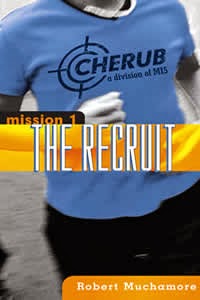
  • The Recruit
    by Robert Muchamore. This book is the first in the “Cherub” series about a group of teens who are trained to be spies for Britian’s MI5 spy agency. First discovered by my son when he was a teen, the “Cherub” books remain my go-to books for good but reluctant readers, especially boys. I’ve found that once a young patron tries “The Recruit,” they can’t put it down and are soon back in the library clamoring for the other titles in the series. In fact, I’ve had to order the more recent books from England -- where they are originally published before being re-published in the United States -- so that I could keep up with reader demand.  
    But the original British cover of “The Recruit,” featuring a running teen, is banal and undistinguished. Simon & Schuster, the U.S. publisher of the series, decided to totally re-do the cover, which now is an attention-grabbing scarlet with silver foil letters. The “Cherub” books are geared for a slightly older audience that the “Alex Rider” audience, so work best with ages 12 up.


  • Interested in the idea of “good books with bad covers”? Check out these entertaining blog posts about the subject of bad book covers: