Showing posts with label Brian Floca. Show all posts

Sunday, July 13, 2014

Tales from the Library: Happy New Year, Caldecott Club!

Way back in January, I posted about my library's Caldecott Club, calling it a "mock mock Caldecott" because we have patrons ranging from ages three to adult voting for the book they consider the best-illustrated of the selection we choose each month. (More background on our "mock-mock" Caldecott can be found here).

Because it's been so popular with our patrons, we decided earlier this year to expand the Caldecott Club from just a few months of the year to year-round. The Caldecott Club "year" would start in March, and culminate with a final vote in January -- just before the actual Caldecott Medal winner is announced at the American Library Association's Midwinter conference. We'd then discuss the actual winners in February and start the cycle over again in March.

2014 Caldecott Medalist Brian Floca
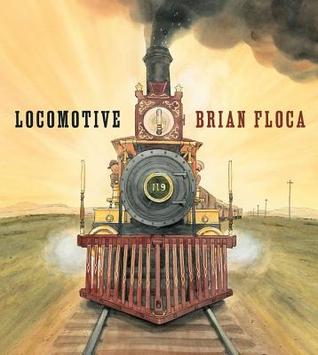
What with one thing or the other, including the end of the school year and the start of our summer reading program, we actually kicked off the "year" with our July Caldecott Club. No matter -- everyone was happy to be there, the "regulars" as well as some new folks. I started off by sharing a bit about the Newbery-Caldecott Awards banquet, which I had just attended at the ALA's Annual Conference (in Las Vegas, of all places). Mostly, I wanted to share the wonderful banquet program designed, as always by the Caldecott Medalist: in this case, Brian Floca, author/illustrator of Locomotive. The program, fitting the motif in Locomotive, looked like an Old West handbill and featuring just the best pop-up of -- you guessed it -- a locomotive. You can read Brian's speech here. 
(Another fun part of the evening were the short videos of this year's winners of Caldecott and Newbery Medal and Honor Books. My favorite video featured Mr. Wuffles, star of the 2014 Caldecott Honor book, Mr. Wuffles, written and illustrated by David Wiesner.)

Then our real fun of our Caldecott Club began, as we read, discussed and voted on the four books I had selected for the evening. We also looked, briefly, at a few illustrations of another book, Firefly July (Candlewick Press, $16.99), featuring very short poems chosen by Paul Janeczyko and illustrations by Melissa Sweet. While everyone agreed that Sweet's illustrations, done in collage and watercolor, were Caldecott quality, the poems -- while short -- were a bit too sophisticated for our group that night. In choosing books for our Caldecott Club, I generally keep in mind that our group skews towards preschoolers and early elementary kids (and their parents). So even though Caldecott criteria calls for the consideration of books for ages birth through 14, the ones we read tend to be aimed at kids 3-8 or so.

At each Caldecott Club, I'm joined by my library colleague Dave Burbank, who uses the skills he learned as a theater major in college to bring alive the books he reads. Besides, Dave is a real whiz with the ELMO, a special "document camera" that connects with our projector to show the book's pages on a big screen. It works great for a large group because everyone can really see the book as Dave reads it.

On this latest evening, we began with Three Bears in a Boat (Dial, $17.99), written and illustrated by David Soman, who is best known for the best-selling Ladybug Girl books he creates with his wife, Jacky Davis. Three Bears in s Boat was the longest book we would read that night, and I wanted to start off with it first, while energy was fresh. Dave read the book, then we asked everyone to give rate the illustrations, from 1 (worst) to 5 (best). Three Bears in a Boat was a crowd-pleaser, gathering an overall rating of 4; kids liked the way Soman drew the bears, while some of the adults loved his watercolor scenes of the bears in the ocean.


Next up was My Bus (Greenwillow, $16.99), written and illustrated by Byron Barton, a master of picture books for the very youngest readers. My Bus is a follow-up to My Car, which Barton published 13 years ago, and which remains popular with new generations of babies and toddlers at my library. My Bus was our youngest book of the evening, and so predictably drew raves from the toddlers and three-year-olds. While older kids and adults could appreciate Barton's use of color and shape, they were less enthralled with the book, which ended with an overall rating of 3.

 Bad Bye, Good Bye (Houghton Mifflin Harcourt, $16.99) was third on our list. I have to admit that it was definitely my favorite of the night; in fact, it's one of my choices for the 2015 Caldecott.  The simple yet emotion-laden rhyming text by Deborah Underwood is matched perfectly by Jonathan Bean's illustrations. Done in ink and Prismacolor tone, Bean's illustrations are multi-layered. In one layer -- the first layer that readers will focus on because it is done in full color -- shows a family's upheaval at moving to a new home.

 In the background of those illustrations, however, Bean presents other scenes, done in more monochromatic colors, which both move the story along and deepen its heart. For example, there's an entire background set of scenes behind the book's opening sequences. As readers see the family's two hugely upset children trying to prevent the movers from doing their work, the background illustrations depict the movers' relentless pace. Like me, it turned out that our crowd that night also loved the book, which garnered a number of 5s from folks of all ages.

Our final book was Number One Sam (Disney, $16.99, written and illustrated by Greg Pizzoli. I loved Greg's book, The Watermelon Seed, which won the 2013 Geisel Award for Best Beginning Reader, and I figured this new book, highlighting Greg's zany humor and cartoon-like illustrations, would be a crowd-pleaser and great way to end the night. (Check out this book trailer to get a sense of the book). The kids really liked Number One Sam and especially the twist at the end. A round of 4s for this one.

Then it was time to vote on our top book of the evening. People can vote for only one book and I was thrilled to see Bad Bye, Good Bye come out as our clear winner. It will now become one of our finalists when we vote on our Caldecott "winner" in January. You can learn more about the book, as well as the author and illustrator here. Meanwhile, stay tuned for more Caldecott Club fun next month!


Tuesday, July 1, 2014

Librarians in Las Vegas

I'm just back from the American Library Association's annual conference, which was held in Las Vegas this year. The last time the ALA conference took place in Las Vegas was 1973, and from the grumbling I heard (and added to myself), it may be another 40 years before the librarians return to Vegas. The conference itself was great, and I came back inspired and educated about new ideas for children's programs. But the problem with Las Vegas was how challenging, and expensive, it was to get to all of the different meeting venues (plus the smoke-filled and hugely noisy casinos at many of these hotels were no bonus for a number of us). An added negative was the heat: it got up to 111 one day, and dipped down to a "low" of 86 at 6 a.m. yesterday morning.

 But there were still lots of pluses from the conference. Among those pluses were two programs I attended. One program, sponsored by the ALA's children's division (the Association for Library Service to Children), focused on how children's librarians in public libraries can help support students, parents and even teachers get the most out of the new Common Core standards. The other program, sponsored by the ALA's Public Library Association division, spotlighted the pluses and minuses of using apps in early literacy, with a special focus on how children's librarians can educate parents about "best practices" for using apps with their children. (I plan to write more about each of these programs in future blogposts).

It wasn't all work, however. I did take time to attend the program headlined by the writer I'd most like to interview in the world: Alexander McCall Smith. I've been a long-time -- and huge -- fan of his books, beginning with his first, The No. 1 Ladies' Detective Agency, and continuing to his other series: the Scotland Street books, the Sunday Philosophy Club (Isabel Dalhousie) books, the Corduroy Mansion books. Then there's his "one-off" books, like his newest, The Forever Girl, plus his children's books. The man is filled with stories: in little more than a decade, he's written or contributed to 100 books!

 And this is after a lengthy career as a profession of medical law and ethics. I'd heard that McCall Smith was totally charming -- a genuinely nice person -- and he certainly came across that way in his ALA talk. Although there were hundreds of people in the audience, McCall Smith spoke to us as if we were just a few gathered in a drawing room in his native Edinburgh. He also was very, very funny, and would even delightedly crack up at his own humor at points. All in all, a wonderful way to spend an hour learning about an author and his books.

Other highlights included:

__ seeing John Mason, who is retiring after 28 years as the educational marketing director at Scholastic, head out on a high note with a hilarious Elvis impression. Mason took the folks gathered at the Scholastic author brunch on Sunday morning by storm, as he swiveled and sang in introducing the six top-notch authors who were previewing their new books.


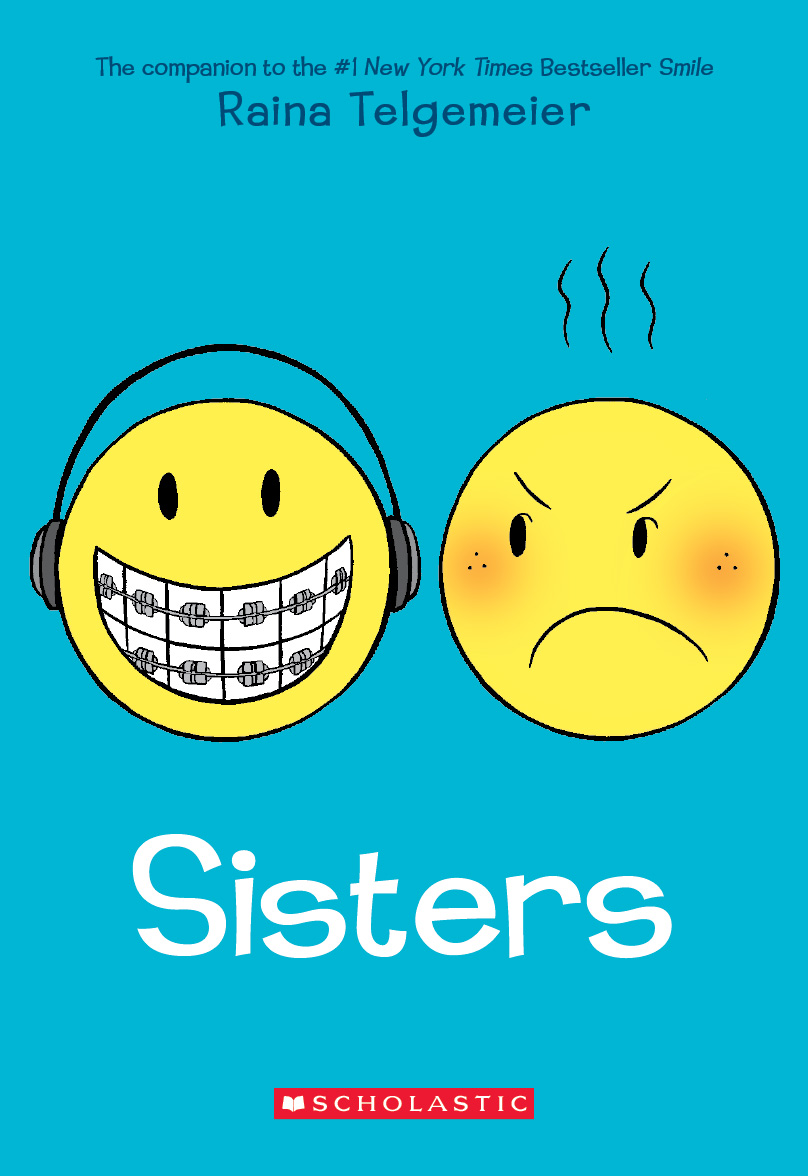
__ hearing, at that same brunch, authors like Newbery Medalist Christopher Paul Curtis, Newbery Honor author Holly Black, and award-winning graphic novelist Raina Telgemeier talk about their new books. Curtis' newest, is The Madman of Piney Woods, a sequel to his Newbery Honor book, Elijah of Buxton. Black, who sported bright blue hair, has teamed up with best-selling fantasy author Cassandra Clare, to create a new series titled The Magisterium; the first book is The Iron Trial. And Telgemeier is set to release, in late August, a sequel to her mega-popular graphic novel memoir Smile. The new book is titled Sisters and details Telgemeier's challenging relationship with her younger sister, Amara.


__ watching author Mac Barnett and Caldecott Medal-winning illustrator Jon Klassen -- both wearing baseball caps -- preview their newest book at a Candlewick Press gathering. Titled Sam & Dave Dig a Hole, this new picture book collaboration between Barnett and Klassen (who won won a 2013 Caldecott Honor for Extra Yarn, written by Barnett), is comically deadpan in both text and illustrations.


 __ attending the annual Newbery-Caldecott banquet, honoring the authors and illustrators who have won the top children's literature awards. This year, author/illustrator Brian Floca won the Caldecott Medal for his astonishing Locomotive, and author Kate DiCamillo picked up a second Newbery Medal (her first was for The Tale of Desperaux) for her book, Flora & Ulysses: The Illuminated Adventures. As always, one of the highlights for attendees is receiving a keepsake in the form of a program designed by the Caldecott Medalist.

This year, Floca played with the themes of Locomotive, producing a program booklet with an Old West flavor; open up the program and a pop-up locomotive appears. The program is both beautiful and playful, as is Floca's illustration for the cover of The Horn Book magazine; the Caldecott Medalist also is always asked to create the cover illustration for the July/August edition of The Horn Book. 

The banquet speeches also were wonderful, as always. Floca began with a reference sure to please Dewey Decimal lovers: "I'd like to begin tonight with some numbers. Illustration and commercial art: 741.6. Public speaking and oratory: 808.51. I think you see what I'm getting at here. I don't want to question anyone's intentions, but when illustrators are asked to give banquet-hall speeches, someone is showing a real willingness to misshelve."

 DiCamillo, who also is the current National Ambassador for Children's Literature, left few eyes dry with her talk, which was, in large part, a tribute to her late mother around the theme of the word "capacious." Her speech also was an elegantly-written and heart-felt look at the importance of books: "We have been given the sacred task of making hearts large through story. We are working to make hearts that are capable of containing much joy and much sorrow, hearts capacious enough to contain the complexities of ourselves and of each other. We are working to make hearts that know how to love this world."


Monday, May 5, 2014

Fact or Fiction?

Picture book non-fiction was in the spotlight at a recent panel moderated by children's literature expert extraordinaire Leonard Marcus. Organized by the folks at Politics & Prose Bookstore, the panel included such non-fiction luminaries as author/artist Brian Floca, winner of the 2014 Caldecott Medal for his book Locomotive (Atheneum, $17.99, ages 7-10),  Richard "Dick" Jackson, the legendary editor who brought us such authors as Judy Blume and such books as Hatchet by Gary Paulsen (as well as Flocca and his "Locomotive"), and artist Susan Roth, who won the 2014 Sibert Medal for her book, Parrots Over Puerto Rico (Lee & Low, $19.95, ages 8-12).

 Marcus, who is both a facile and knowledgeable moderator, kicked things off by noting that "non-fiction is the kind of book I always read growing up." He added: "I think that the kind of stories that appeal to us are reflective of our temperature. Some ask 'What If?' Others are more intersted in 'Is it true?'"

Children's non-fiction "has had its ups and downs," noted Marcus, who is renowned for his knowledge of children's book history and is the author of such books as Minders of Make-Believe: Idealists, Entrepreneurs and the Shaping of Children's Literature. In the 1950's, worried that the Russians were beating us in the science, technology and space war, non-fiction was "a very hot thing," Marcus said.

The interest in non-fiction for kids, however, waned in the 1960's and 1970's. Fiction was king in children's literature, and that was reflected in the children's books which won the top literary awards. Milton Meltzer, a critically-acclaimed author of non-fiction for kids, decried the trend in the 1970's  in an article titled "Where Do All the Prizes Go? The Case for Non-Fiction."

Now the pendulum has swung back to non-fiction, Marcus said, pointing to the "mania" that seems to have developed around the Common Core. Meanwhile, non-fiction has become more of a "literary form," he said, adding: "It's not 'Just the facts, m'am.'" Instead, authors and illustrators are "actually shaping the facts into a story."

Awards like the Sibert Medal, given annually by the American Library Association to the most distinguished informational book for children, also have helped raise the bar, convincing publishers that kids deserve not only a good and true story but also need such things as source notes, bibliographies, etc.

  I served on the 2012 Sibert Medal committee and got to see what great non-fiction is out there for kids; I'm especially proud of our winner, Balloons Over Broadway, written and illustrated by Melissa Sweet and the first picture book winner of the Sibert Medal, which was established in 2001.

Writing and illustrating great non-fiction for kids isn't necessarily easy, as the Politics & Prose panelists noted. For example, Floca said that he had planned to construct Locomotive around the journey of one crew and one locomotive along the Transcontinental Railway, and had actually done quite a bit of work based on that idea when he found out that the engines and crew were changed along the way. That meant that Floca's structure for the book was "blown to pieces" and he had to do some major re-writing.

Roth noted: "You have to tell the truth" as an author and/or illustrator of children's non-fiction. But just how much of the truth to tell is another question that can be vexing for writers of children's non-fiction picture books. Another question is just how much information you can include in the picture book format. Author/artist Duncan Tonatiuh said he had to make some difficult decisions about what facts were most important in his newest book, Separate Is Never Equal: Sylvia Mendez and Her Family's Fight for Desegregation (Abrams, $18.94, ages 7-10).

The beautifully-illustrated book tells the compelling story of a girl whose family challenged segregated schools 10 years before the landmark Brown vs. Board of Education case. It's a key moment in American civil rights, yet Tonatiuh noted that he had to decide "how much to cover when I only had 40 pages to work with." He added that he wanted to "give readers enough information without overwhelming them."

Figuring out how to shape a non-fiction story also is a challenge. Jen Bryant, author of A Splash of Red, a biography about a man named Horace Pippin who persisted in his art despite losing much of the use of his right arm in Word War I, said that each book "is a new adventure." Bryant added that she doesn't really have a method for creating her books except for "sloshing around in a person's life" until "the materials tell you where to focus." (Note: A Splash of Red is illustrated by Melissa Sweet).

While the facts are crucial to good children's non-fiction books, the illustrations also have an important role to play, Jackson said, adding: "From my point of view, non-fiction is particularly interesting because it inspires terrific art."
R. Gregory Christie has illustrated a number of children's non-fiction books, including the recently-published Sugar Hill: Harlem's Historic Neighborhood (written by Carole Boston Weatherford) (Whitman, $16.99, ages 7-10). While photographs can be important in giving an artist a "foundation," Christie said during the Politics & Prose panel discussion, "your talent as an artist and your interpretation is what brings that person to life."


Monday, January 27, 2014

The Winners!


Today’s announcements of rhe American Library Association’s children’s and teen literature awards can be summed up in two words: happy surprise.

While many children’s book experts had tagged “Locomotive,” written and illustrated by Brian Floca, as a potential winner for the 2014 Caldecott Medal, most seemed to agree that “Journey,” written and illustrated by Aaron Becker would be the likely pick. Instead, “Journey” was one of three 2014 Caldecott Honor books. The other 2014 Caldecott Honor books were “Flora and the Flamingo,” written and illustrated by Molly Idle, and “Mr. Wuffles,” written and illustrated by David Wiesner, which was another popular pick for the actual medal.

The crowd of hundreds of librarians gathered at the awards announcements this morning in Philadelphia went wild when “Locomotive” was announced as the winner of the 2014 Caldecott Medal. In a nice touch, the Caldecott committee members who selected the book as the winner stood and blew on train whistles when they were recognized for their work.

In “Locomotive,” Floca combines impeccable research with beautifully detailed illustrations to show how the locomotive helped bring the country together. Train buffs of all ages, in particular, will delight in the many facts that Floca packs into his book. But you don’t have to be a fan of trains to appreciate the mastery of Floca’s art in “Locomotive.”

The 2014 Newbery Medal winner, “Flora & Ulysses,” written by Kate DiCamillo, was another happy surprise. Again, many children’s book experts loved the book and had touted it as a potential winner. But it wasn’t a sure bet because the Newbery Medal is given for text, and “Flora & Ulysses” has a number of comic panel illustrations that are part of the story.

In “Flora & Ulysses,” DiCamillo tells the story of a lonely girl named Flora whose life is transformed by a squirrel that is sucked into a neighbor’s vacuum cleaner and emerges with superhero powers. The book is, by turns, quirky, hilarious, compelling and wholly enjoyable. It’s already a word-of-mouth bestseller among young patrons in my library; we’ll definitely be adding a couple more copies.

In fact, it’s been a year of happy surprises for DiCamillo, who was selected earlier this month as the new National Ambassador for Young People’s Literature. DiCamillo is the fourth children’s book creator to hold the two-year post, which was created by the Library of Congress to highlight the importance of children's books.

Four 2014 Newbery Honor books also were selected. Three of them were on many people’s shortlist of contenders: “Doll Bones” by Holly Black; “The Year of Billy Miller” by Kevin Henkes; and “One Came Home” by Amy Timberlake. But the final choice – “Paperboy” by Vince Vawter – was a true dark horse.

All in all 18 different children’s and teen literature awards were announced today, so there will be plenty of fodder for upcoming blog posts!