Saturday, June 21, 2014

Book Reviews: Two Stellar Teen Novels

Reading novels written for teens -- what we call "YA" or young adult literature -- isn't easy for me. Don't get me wrong: I think there are some amazing YA books being written, and that YA writers can easily compete with the best adult writers out there. And I'm certainly not just talking about the ultra-popular John Green, but writers like Libba Bray, Walter Dean Myers, Elizabeth Wein, Rainbow Rowell, Meg Medina, David Levithan, Andrew Smith and many, many others.


No, my problem isn't with the writing or the writers of YA lit. My problem is this: YA books can be so compelling and so emotionally fraught that I sometimes just have to work up the courage and energy to dive into them. Once I start a well-written YA book, I know that it's going to take over some of my interior life and most likely leave some traces of itself behind, and I have to be ready --no, steel myself -- for that. I can hear you thinking: 'Well, isn't that the mark of a good book? Aren't good books for any age -- not just teens -- like that as well?" To respond: yes, it's definitely the mark of a good book. It's true that middle grade novels (those books for ages 7-12) and even picture books also can be memorably heart-wrenching. I find it hard, for example, to stay dry-eyed through A Ball for Daisy, the 2012 Caldecott Medal winner written and illustrated by Chris Raschka. But YA books offer a particularly intense reading experience for me, perhaps because the teen years are such an intense time, something the books naturally reflect. Not many adults I know would willingly relive the emotional heartache and confusion of their teen years, yet putting that heartache and confusion in the spotlight and trying to figure out how to deal with them is the core of the best YA novels.

So, this is all to say that it takes me quite a while to get into the groove of reading YA fiction. Once I'm there, however, I remember why I like reading teen books so much. The two teen novels spotlighted in this blogpost are perfect examples. Both authors, John Corey Whaley and e. lockhart, are award-winning writers who explore the deepest corners of the soul in their teen novels, yet also create characters and plots that keep readers turning the pages.
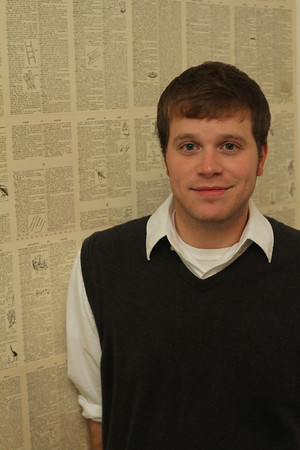
John Corey Whaley
 Let's start with Noggin (Atheneum, $17.99, ages 14 up), John Corey Whaley's second book. Fans of YA lit know that it's a big deal to win the Michael Printz Award, given annually by the American Library Association to the best novel for teens. (In fact, I've heard the Printz referred to as the "Newbery Medal for teens."). Whaley's first novel, Where Things Come Back,  not only won the 2012 Printz but also the William Morris Award, given annually to the best teen debut novel. So Whaley immediately became a writer to watch, and with good reason: "Where Things Come Back" is just a marvelous book.

Because of this, I was predisposed to like Whaley's newest book, Noggin, despite the rather ghoulish (to me, at least) premise. The gist: Teenager Travis Coates, who is dying of cancer, agrees to participate in an experiment in which his head, free from the disease, will be surgically removed, carefully stored in a cryogenics lab,  and -- if all goes well -- attached to another torso sometime in the future. In other words, Travis will be able to come back to life, albeit with his head attached to someone else's torso. Travis, a wise-cracking teen to the end, decides it's worth trying, given that he's dying anyway. Five years later, Travis wakes up to find that the experiment actually has worked and that he's been literally resurrected from the dead. Here's the book's opening paragraph: "Listen -- I was alive once and then I wasn't. Simple as that. Now I'm alive again. The in-between part is still a little fuzzy, but I can tell you that, at some point or another, my head got chopped off and shoved into a freezer in Denver, Colorado."

But there's a catch -- a big one -- to Travis' resurrected life; for, while Travis was in the deep freeze for those years, everyone else has moved on. Travis is still 16 and still in high school, but his friends are now in college and of legal drinking age. His girlfriend is engaged to someone else, and his best friend struggles to bridge the age gap. Everything and everyone is somewhat familiar but also somehow changed, especially Travis' parents, who are both thrilled and somewhat puzzled to have their son come back to life. Travis, meanwhile, is despondent at going back to the same high school, but fortunately makes a new friend named Hatton who makes it at least bearable. Overall, the resurrected Travis has one goal: to convince his old girlfriend Cate to ditch her fiance. (This book trailer for Noggin gives you a taste of the story.)

The idea behind Noggin is terrifying and fascinating, as Whaley makes us think about what we would do if faced with Travis' challenge to adjust to an entirely new body while trying to pick up the pieces of his old life. Travis himself is a hugely appealing character, someone who is astonished to be given back his life even as he wonders why. Through it all, Travis somehow maintains his sense of humor and even his snark. In Noggin, Whaley proves himself, once again, to be a heckuva writer as he takes a wild premise and turns it into a book that plumbs the depths of what exactly a life is worth. Overall, I'd put my money on Noggin as a top contender for the 2015 Printz Award. It's definitely one of THE teen novels of the year.
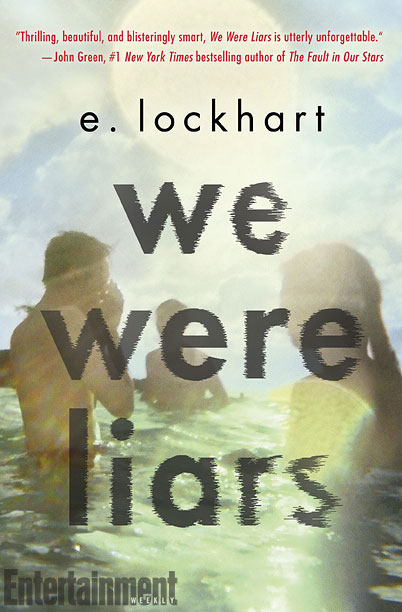
For something completely different, but just as good, try We Were Liars (Delacorte, $17.99, ages 14 up), the newest novel by e. lockhart. I'm a fan of lockhart's novels, particularly The Disreputable History of Frankie Landau-Banks, which won a 2009 Printz Honor and was a finalist for the National Book Award. In her latest book, lockhart masterfully blends memory and reality to create a gut-wrenching look at love and loss. The narrator is Cadence -- Cady for short -- who is part of the glamorous Sinclair family, famed for their looks and their money. (It's a family that will be reminiscent of the Kennedys for some readers, especially because of the book's Massachusetts setting).

Cady is the only child of Penny, one of three daughters (Carrie and Bess are the others) of Tipper and Harris Sinclair, the family's matriarch and patriarch. Each summer all of the Sinclairs gather on their own island, near Martha's Vineyard, where each family has their own house. For as long as she can remember, Cady has been part of a group of four each summer, including her two cousins, Johnny and Mirren, and Gat Patil, a friend of Johnny's and the nephew, by marriage, of Carrie Sinclair. As children, the quartet -- they call themselves the "Liars" --  revel in the endless days of sun and surf, but everything changes the summer that Cady is 15. That's the summer that she and Gat fall in love, and the summer that tragedy strikes.
e. lockhart

It's difficult to say more about the story without giving away the shocking plot twist by which lockhart creates a story within a story. Suffice to say that her writing is hypnotic as she pulls readers along, along like the waves of the beach, with her into the dark heart of a family. For example, here's some of the opening chapter of We Were Liars:
 "Welcome to the beautiful Sinclair family.
      No one is a criminal.
      No one is an addict.
       No one is a failure.
 The Sinclairs are athletic, tall, and handsome. We are old-money Democrats. Our smiles are wide, our chins square, and our tennis serves aggressive.
 It doesn't matter if divorce shreds the muscles of our hearts so that they will hardly beat without a struggle. It doesn't matter if trust-fund money is running out; if credit card bills go unpaid on the kitchen counter. It doesn't matter if there's a cluster of pill bottles on the bedside table.
 It doesn't matter if one of us is desperately, desperately in love.
         So much
         in love
         that equally desperate measures
         must be taken. "

As lockhart pulls us into Cady's story, the ground seems to shift under our feet. We keep reading because it's impossible -- impossible! -- not to keep reading, to follow Cady into what we are sure is some kind of tragedy. lockhart's impeccable pacing, as well as Cady's magnetic presence, compels us to keep moving through the book, to find out what exactly is happening and has happened to Cady. We Were Liars isn't an easy book to read, but it's an important book to read because it really makes readers think deeply about family ties, truth-telling, and the nature of love.

(Review based on copies of Noggin and We Were Liars received from the publishers).


Monday, June 16, 2014

Maira Kalman's Quirky Magic

Not long ago, my library - partnering with the folks at Politics & Prose, the premier independent bookstore in Washington, D.C. -- hosted a program featuring world-renowned author/artist Maira Kalman. I've long loved Kalman's work, especially her children's books. Kalman is one of those multi-talented people, someone who has done everything from creating covers for The New Yorker magazine to designing a one-of-a-kind umbrella. (Check out all of her work at her website).

 Hosting Kalman was an interesting and entertaining experience. Most of the out-of-town authors we've hosted arrive with an "escort," someone who is driving them around town, getting them meals, and generally making sure that their time in DC goes smoothly. So I was surprised to see Kalman just show up, by herself,  in our library a couple of hours before her talk. She had taken the train from New York and then grabbed a cab to our library; upon arriving, she asked if we'd like her to sign books, and also where she could get a sandwich before her program. I've since learned that this is trademark Kalman, as she is someone who likes to see the world on her own terms. In any case, it was delightful to have her sitting in our staff room, chatting about this and that, and signing our much-loved library copies of her books.

A hour or so later, Kalman was delighting a crowd of folks gathered for her talk, which was focused on the three children's non-fiction books she has written. The audience included kids, teens and adults, and everyone seemed to be having a wonderful time listening to the witty Kalman talk about her life and work. When the program was over, everyone waited patiently in a long line to have books signed by Kalman, who took her time talking with each fan. At the end, Kalman was ready to take a cab back to Union Station but I demurred; I was having too much fun talking with her. So we hopped into my van and continued the conversation until it was time for her train.

You'll get a flavor of Kalman and our event from the article I wrote for our city newsletter; I'm re-posting it below.
Photo by Jeffrey MacMillan

It’s hard  -- no, make that impossible -- to pigeonole Maira Kalman’s work. She writes and illustrates books for adults like And the Pursuit of Happiness and The Principles of Uncertainty. She creates covers for The New Yorker magazine, writes and illustrates blogs for The New York Times, and publishes acclaimed biographies for children of Abraham Lincoln and Thomas Jefferson. And don’t forget about the illustrations Kalman did for Food Rules, the healthy eating bible written by Michael Pollan, as well as the illustrations she created for The Elements of Style, the classic “how to write well” manual written by William Strunk and E.B. White. With Daniel Handler (a.k.a. Lemony Snicket, the author of A Series of Unfortunate Events, Kalman has co-authored the award-winning young adult novel, Why We Broke Up, and a children's picture book, 13 Words. The two also just released a new art/poetry collaboration for teens and adults, Girls Standing on Lawns.
 
Kalman’s work has been described as a unique type of journalism, a kind of “narrative drawing” in which she illustrates and writes about the world around her. “I do see myself as a journalist,” Kalman told the crowd of adults and kids who came to hear her recently in the Takoma Park Community Center. “I am an artist at large, going around the world and reporting on what I see. Sometimes, it’s very pointed, like the books on Lincoln or Jefferson. But sometimes, it’s whimsical, like The Principles of Uncertainty. But still, I’m always trying to make a human connection between the experience of being alive and trying to make sense of … the world.”

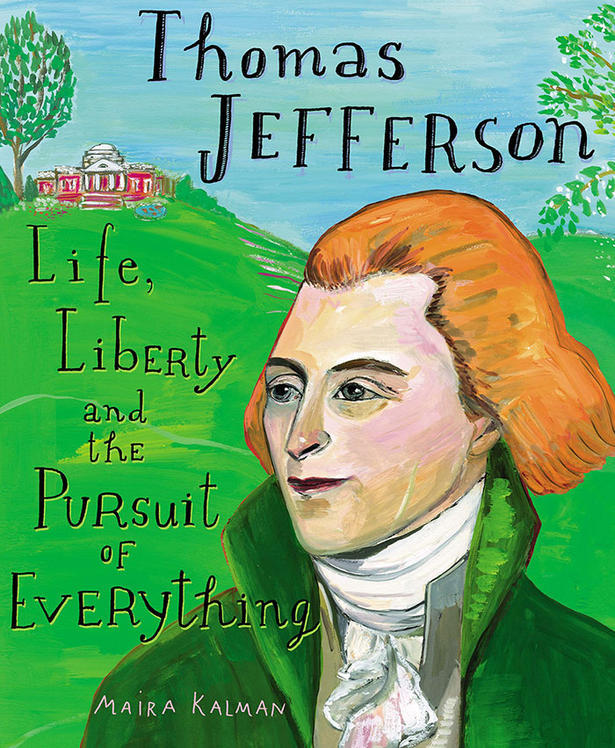
Surprisingly, Kalman, 64, doesn’t have a college degree or even any formal art training. But her unique vision of the world has won her millions of fans around the world, who delight in the way her books combine research, thoughtfulness, humor and quirkiness. All of those qualities were on display at the Takoma Park talk, which was focused on Kalman’s non-fiction books for kids: Fireboat; Looking at Lincoln; and Thomas Jefferson: Life, Liberty and the Pursuit of Everything.
           
Kalman said she particularly enjoys writing for kids “because there are no limits.” Yet writing and illustrating a children’s book, especially a non-fiction book, can be quite challenging, Kalman added, because “you need to edit to 32 pages what you really want to say, and there should be a sense of humor and some sense of optimism.” In Fireboat, for example, Kalman tells the story of the John J. Harvey, a boat that was long past its heyday when some New Yorkers bought and restored it in the late 1990’s. When 9/11 happened, the Harvey was, with two other fire boats, instrumental in fighting the fires at the site of the World Trade Center buildings because the water mains there were buried under the rubble. Kalman said Fireboat is “a story of being resilient in a tremendous way.” She added that stories like Fireboat are “a way to talk to kids about tragic events…. It says, ‘This is what happened and this is how we dealt with it.’”
           
  In Looking at Lincoln, Kalman said she tried to give young readers “a sense of his extraordinary presence…. If you study him, there’s no way not to fall in love with Abraham Lincoln.” In fact, Kalman joked, she herself is famous for saying that she’s in love with Lincoln “to the point that I always say that I would have been a better wife than Mary (Todd Lincoln).” During her presentation, Kalman talked about illustrating items that Lincoln owned help bring him alive for young readers, noting that his now-trademark stovepipe hat “is part of the iconic persona” Lincoln created for himself. In fact, Kalman believes that objects like Lincoln’s hat or Jefferson’s jacket, which he lined with socks to make it warmer, offer a key way to connect to an otherwise remote historical figure.

Writing about Jefferson was much harder than writing about Lincoln, Kalman noted.  Jefferson “is a different guy. I don’t love him, but I admire and respect him tremendously,” Kalman said, adding that Jefferson “doesn’t come across as having a sense of humor like Lincoln.” But Kalman was clearly taken by what she called “the genius of his brain and the breadth of his interests,” which she underlines in the subtitle of her book:  Life, Liberty and the Pursuit of Everything. That’s what makes Jefferson’s refusal to give up his slaves so difficult to swallow, and “so heartbreaking,” she added.
           
Trying to sum up such a significant and complex person like Jefferson can be daunting, Kalman said, adding that illustrations can be particularly helpful in conveying facts without adding more text. Asked whether the words or the images come first to her, Kalman said that they mostly come together. Kalman, who emigrated to the United States from Israel when she was a child, said that she fell in love with the English language, and “so words live for me in their own kind of visual floaty thing. “Then, I’m always seeing a lot of things that I know I want to paint. Somehow everything (words and pictures) gets smooshed together in this amazing way.”

Friday, May 23, 2014

"Zita the Spacegirl" Author/Artist Ben Hatke Wows the Crowd

Graphic novelist Ben Hatke is a sprite of a man, and sprightly too, constantly in motion as he talks and shares his love of comics with young fans. He certainly wowed the crowd of 75-plus kids and adults who came to my library the other night to hear him talk about the latest book in his best-selling Zita the Spacegirl series. (We're lucky to have a partnership with Politics & Prose, the well-known Washington, D.C. independent bookstore; the partnership allows us to host well-known authors and artists like Hatke a our library, while P&P gets to sell books at the events to anyone who wishes to purchase them).

Hatke clearly revels in speaking to kids about comics and drawing and making stories. He began by giving the excited crowd a short, dynamic lesson in the mechanics of comics, and why he loves them. It was a bit like taking Scott McLeod's masterful teen/adult book Understanding Comics, pulling out the key tenets, and then presenting them in a way that was both entertaining and educational for school-age kids. Kids listened intently as Hatke drew and talked about things like the way comics "play on things our brain likes to do, like making connections" as we move from one panel to the next.  Everyone laughed as Hatke illustrated the way comics show time; he drew three panels, the first showing a bunny whistling as she sets out at sunrise one day, the second showing her sweating in the heat of the noonday sun beating down on her, and the third showing her totally spent under the light of the moon.
Hatke draws for the crowd.

Kids also got a real kick out of the way Hatke detailed his love for using body language to carry parts of his stories. To show what he meant, Hatke drew a character who looked mildly grumpy and who had a thought bubble over his head that read "I am angry!" Then Hatke drew a second character who entire body was contorted with rage and whose thought bubble read "Who stepped on my cheeseburger?!" As Hatke noted: "I use the idea of body language to show as much as I can of how the characters feel. It's a way to make the words and the pictures really work together."

Hatke said he's always been drawing, and always been interested in stories, "all kinds of stories -- chapter books, picture books and, of course, comics." Interestingly, Hatke said it was his wife who had the initial idea for the Zita books: Zita the Spacegirl, Legends of Zita the Spacegirl, and the just-published The Return of Zita the Spacegirl (First Second, $17.99 hardback, $12.99 paperback, ages 5-12). "When I was in college, I met a really cute girl" who had created the character of Zita the spacegirl, Hatke said. "I thought I'd try to impress her by developing the character. It worked -- she married me!"

Some young fans at my library pose with Zita the Spacegirl.

Asked by a young audience member why he chose to make the main character a girl, Hatke said that while "I don't really think a lot about that, I do have four daughters and I grew up with two sisters. So I've been around girls having adventures." Of course, audience members wanted to know whether Hatke plans more Zita books. "Probably. But right now I'm working on some other books." Hatke added that "Zita will be older when we next see her," noting that he's thinking of have her "age in real time," so that if the next Zita book comes out five years from now, she'll be five years older. The final sketch in The Return of Zita the Spacegirl gives a hint of that, contrasting a teen-age Zita with the familiar younger version.

Meanwhile, Hatke is having fun trying out something new -- a picture book. Using our library's ELMO (a type of overhead projector), Hatke gave the crowd an early look at Julia's House for Lost Creatures (ages 4-8), which will be published by First Second in early September. Hatke's whimsy works well in the picture book form, as he tells the story of a girl who lives in a "walking house" and welcomes all kinds of creatures who need a home. As more and more creatures pile into the house, however, things get chaotic until Julia figures out a solution that works for everyone. Hatke also previewed the book he's working on now ("Maybe the best thing I've ever done") about a "little girl and a robot and a friendship that develops over the summer").


Monday, May 19, 2014

News Round-Up: The Kids' Lit World Is Hopping!

Children's Book Week has just wrapped up, but there's still lots happening in the world of children's & teen literature. Here's a quick round-up of the latest happenings:

There's been quite a kerfluffle -- no, make that outrage -- over the fact that conservative talk host Rush Limbaugh won the Children's Choice Book Award for Author of the Year for his book, Rush Revere and the Brave Pilgrims. How was the choice made? Well, it's an online voting process created by the Children's Book Council. The council, which is a national, non-profit trade association of children's book publishers, is the same organization that sponsors Children's Book Week. As part of the celebration, the council created the Children's Choice Book Awards; the finalists generally are the authors and illustrators who have sold the most books. So, in this year's author category, in addition to Limbaugh, other finalists included Diary of a Wimpy Kid author/illustrator Jeff Kinney, Heroes of Olympus author Rick Riordan, Allegiant author Veronica Roth, and Dork Diaries author Rachel Renee Russell.


The choice of Limbaugh as Author of the Year kicked up a lot of dust in the children's book world. 100 Scope Notes Blogger Travis Jonker did a good round-up of links about the discussion going on. I'd add this School Library Journal article to the mix. And here's one more from Roger Sutton, editor of The Horn Book, who notes that lest we all think that the Children's Book Council "is just a big bunch of dittoheads," here's a look at one of the council's efforts to promote more diversity in children's and teen books.

The bottom line for my library is that we're not purchasing Rush Revere and the Brave Pilgrims, given the poor reviews in professional journals, which point to numerous inaccuracies. And the bottom line for me, as a reviewer and librarian, is that there's a good reason that the criteria for the Caldecott and Newbery Medals specifically note that the awards are not for popularity. Basing an award on how many books have been sold -- as the Children's Choice Book Awards do -- leads to exactly what happened last week when Limbaugh was chosen as the Author of the Year, and Grace Lee won Illustrator of the Year for illustrations that she did for a Disney program spin-off book, "Sophia the First: The Floating Palace."

Whew! On a more positive note, the Twitter campaign #WeNeedDiverseBooks already has produced some results. First Book, a Washington, D.C.-based non-profit focused on children's literacy, has created the "The Stories for All Project" and pledged to do bulk purchasing of children's books that reflect the nation's diversity.


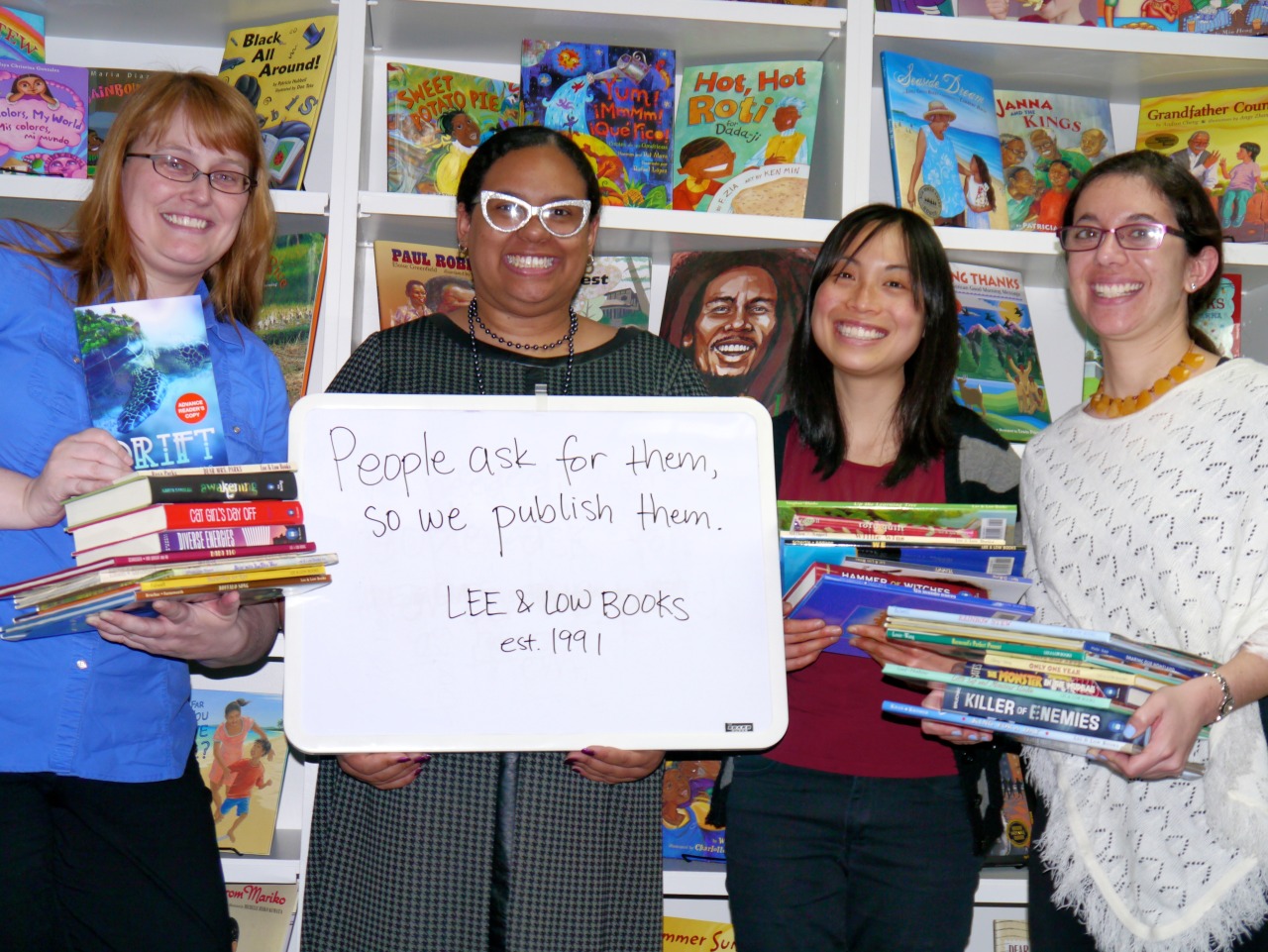
In the initial phase of the First Book initiative, the organization has chosen two publishers -- HarperCollins and Lee & Low Books --and will purchase $500,000 worth of books highlighting diversity from each of them. The books then will be given or sold at a low cost to educators working with children in need; all the educators have to do is first sign up at www.firstbooks.org. In a nutshell, First Book is stepping up to provide the market that publishers contend they need to publish more diverse books for kids.

In an interview with NPR, First Book CEO Kyle Zimmer explained why it was important for young readers to have books that reflect diverse cultures and communities. Zimmer notes that educators have long understood that "when kids see themselves in books, they are far more likely to become enthusiastic readers. "But we also know that this isn't just about kids seeing themselves in books, this is also about kids seeing other kids in books, and other cultures in books," Zimmer said.

Some of the first books purchased by First Book to distribute to kids in need include: Shooter by Walter Dean Myers (HarperCollins); The Storyteller's Candle: La Velita de los Cuentos by Lucia Gonzalez (Lee & Low); and Passage to Freedom: The Sugihara Story by Ken Mochizuki (Lee & Low).


One more quick note of news about kids' books -- no, make that teen books! Scholastic is sponsoring a Twitter campaign called #IReadYA this week. It's a great way to focus on the importance -- and fun -- of reading for teens. Check out the details here. And check out School Library Journal's great summer reading list of cool -- and recent -- books for teens.
  • Shooter", Walter Dean Myers (HarperCollins)
  • "Tofu Quilt", Ching Yueng (Lee & Low Books)
  • "In the Year of the Boar and Jackie Robinson", Bette Bao Lord (HarperCollins)
  • "The Storyteller’s Candle: La Velita de Los Cuentos", Lucia Gonzalez (Lee & Low Books)
  • "El Bronx Remembered: A Novella and Stories", Nicholasa Mohr (HarperCollins)
  • "Passage to Freedom: The Sugihara Story", Ken Mochizuki (Lee & Low Books)
  • - See more at: http://www.firstbook.org/first-book-story/media-center/press-room/275-first-book-announces-pioneering-new-initiative-to-create-more-diversity-in-childrens-publishing#sthash.aajZ3bvX.dpuf

  • "Shooter", Walter Dean Myers (HarperCollins)
  • "Tofu Quilt", Ching Yueng (Lee & Low Books)
  • "In the Year of the Boar and Jackie Robinson", Bette Bao Lord (HarperCollins)
  • "The Storyteller’s Candle: La Velita de Los Cuentos", Lucia Gonzalez (Lee & Low Books)
  • "El Bronx Remembered: A Novella and Stories", Nicholasa Mohr (HarperCollins)
  • "Passage to Freedom: The Sugihara Story", Ken Mochizuki (Lee & Low Books)
  • - See more at: http://www.firstbook.org/first-book-story/media-center/press-room/275-first-book-announces-pioneering-new-initiative-to-create-more-diversity-in-childrens-publishing#sthash.aajZ3bvX.dpuf

    Thursday, May 15, 2014

    Children's Book Week 2014

    What a Children's Book Week this has been! And it's not over yet. For me, it's been a celebration involving an amazing mix of talented authors, including best-selling Llama, Llama author/illustrator Anna Dewdney, the quirky genius Maira Kalman, and two-time Newbery Medalist Lois Lowry. A crazy-quilt of styles, right? But a great way to highlight the breadth of children's literature, especially when two of the authors -- Dewdney and Kalman -- made their appearances at *my* library!

    I'm cheating a little on the parameters of Children's Book Week, which technically runs from May 12-18 this year. Llama, Llama star Dewdney actually spoke at my library on Thursday, May 8. So it wasn't really Children's Book Week yet. But that certainly didn't matter a whit to the nearly 70 excited kids and their grown-ups that Dewdney delighted at her early-evening program, which was designed to showcase her newest book, Nelly Gnu and Daddy Too (Viking, $17.99, ages 3-6). Dewdney's appearance in our library's Children's Room was thanks to our partnership with Politics & Prose, an independent bookstore in Washington, D.C. The P&P folks are in the lucky position of having too many authors who want to visit, and so P&P uses libraries like ours as alternate venues. It's a win-win situation: we get to host authors whom we could never afford, while P&P can say yes to an author (and, of course, sell some books).

    Dewdney clearly knows her audience, some of whom came clutching love-worn stuffed Llama Llamas. She started by drawing Llama, Llama on easel paper, to "invite" him to join the event. The kids loved watching Llama, Llama take shape as Dewdney drew him, and my library loved that she later signed the portrait "Llama, Llama loves the Takoma Park Maryland Library." A signed piece of original artwork from an author who has sold millions of books -- it made our night! Of course, we'll frame it and put it up in the library for all to enjoy.

    Then Dewdney launched right into an energetic reading of what is probably her most popular book, Llama, Llama, Red Pajama. It was a great way to warm up the crowd for her new book, which puts Nelly Gnu, a friend of Llama, Llama, in the spotlight. While the kids still clearly are partial to the Llama, Llama books, they also enjoyed hearing Dewdney read about how Nelly Gnu's dad helped her create a special playhouse using a box, some simple tools, and lots of creativity. As usual, Dewdney uses a lilting rhyme to tell her story, and her illustrations are bright and cheerful. Best of all, Nelly Gnu and Daddy Too might just inspire even more parents to spend time on hands-on creative projects with their kids.

    In a mega-change of pace two days later, our library hosted Maira Kalman -- she of The New Yorker covers, The New York Times blogs, and such books as And the Pursuit of Happiness (for adults) and Fireboat for kids. (And yes, this was also before the official beginning of Children's Book Week, but we can be flexible....)
    Photo by Jeffrey MacMillan
    The multi-talented Kalman actually came to town to talk about her non-fiction books for kids, which -- in addition to Fireboat -- includes Looking at Lincoln and her newest book, Thomas Jefferson: Life, Liberty and the Pursuit of Everything (Penguin, $17.99, ages 7-10). I plan to write specifically about Kalman's talk in another blog post, but suffice to say that she brought down the house with her wry, self-deprecating humor, witty observations about life, love and history, and her brilliantly-hued gouache illustrations. My talented neighbor Jeffrey MacMillan, a professional news photographer, attended the event and took this great photo of Kalman in action.

    I wish I could say that Lois Lowry, winner of the Newbery Medal for not one, but two books -- Number the Stars and The Giver -- also was a guest at my library. But Lowry actually was the feature attraction at the Library of Congress' Children's Book Week celebration. On Monday morning, Lowry and Nikki Silver, producer of the forthcoming film adaptation of The Giver, spoke to a rapt audience of a couple of hundred school kids (and a smattering of adults like me). In addition to their discussion, we were treated to a fast-paced sneak peek of the film, which will be released this August and which stars Jeff Bridges and Meryl Streep, with a cameo appearance by Taylor Swift. Lowry herself has been involved with the making of the film. Here's one of the official movie trailers -- it's pretty stunning:


    Lowry was her typical articulate, thoughtful self as Silver queried her about how she became an author for kids. The kids were fascinated to learn that Lowry,  now 77, dropped out of college to get married, had four kids by the time she was 25, and didn't publish her first book until she was 40.  Yet, Lowry said she wanted to be a writer from an early age; she told the audience that, in a letter she wrote at age 10, and which was published in a magazine, she said "I am writing a novel. It's called A Dog Named Lucky. I'm on Chapter 13."

    Many years later, it was a magazine editor who convinced Lowry that she was actually a natural writer for kids and teens. At first, she resisted the notion, but then she realized several things: "I enjoyed it, I was pretty good at it, and when I began to get a response from kids, I began to perceive what a difference books can make in kids' lives. That makes me take what I do very seriously. I never think that it is a lesser thing to write for kids."

    Asked by Silver how she got the idea for The Giver, Lowry said that it came out of her visits years ago with her elderly father. During one visit, "I perceived, for the first time, that memories were beginning to disappear for him. I realized that he had forgotten my sister" even though her death at an early age "was surely the worst thing that had happened to my parents." As Lowry was driving home from the visit, she began wondering "what would it be like if we forgot all our sad memories?" As she mulled over the idea, however, she also decided that "we need all those memories (sad and happy) because they make up who we are."

     And thus was born The Giver, in which Lowry tells of a world that is seemingly perfect, in which no one has sadness or cares, and also no real emotional life. But there is one person, "The Giver," who holds all of the society's memories, in case they ever are needed in the future. When a 12-year-old boy, Jonas, is chosen to become the next Giver, he realizes there is a cost to the placid society in which he lives, and he eventually has to choose whether to stay there or flee in a bid to restore his own humanity.

    Although Lowry had no idea that she was creating a new genre of fiction, she generally is created with creating the first "dystopian" novel for teens. Since then dystopian fiction has become all the rage, as shown by the success of The Hunger Games, Divergent, and others. Those books have become successful films in recent years, but Silver noted that she had optioned The Giver years before that in hopes that she could produce a film version of it. Turning the interviewer tables, Lowry then asked Silver why she wanted to create a film from The Giver. "It's smart and there are great characters," Silver responded. "The idea of visually creating this world was very exciting."

    Still it has taken years for the film to actually happen, Silver said,"noting that there were "many screenplays written." Lowry, meanwhile, noted that while she "cringes" at previous efforts to adapt her work into film, she is hopeful about The Giver movie. "I also happen to be a great lover of movies, so I don't automatically think 'Book good, movie bad.' But a movie can't ever be the same thin as a book." She noted that, while reading a book, "you form pictures in your mind about it, and those pictures are different for everyone. With a movie, everyone has the same pictures." Lowry also noted that in the book version of The Giver, "I could have an ambiguous ending, but in the film, there has to be more of an ending."

     As the event with Lowry and Silver wrapped up, one student asked Lowry what she thought was the message of The Giver. "I don't like the idea of messages in books," Lowry said, noting that "you ruin a book" by beginning with a message. "Yet once the book is finished.... messages will arise for readers." In the case of The Giver, Lowry said she believes the story is a cautionary tale demonstrating that "we should be very, very careful in the choices we make in this life... and the compromises too."

    Monday, May 5, 2014

    Fact or Fiction?

    Picture book non-fiction was in the spotlight at a recent panel moderated by children's literature expert extraordinaire Leonard Marcus. Organized by the folks at Politics & Prose Bookstore, the panel included such non-fiction luminaries as author/artist Brian Floca, winner of the 2014 Caldecott Medal for his book Locomotive (Atheneum, $17.99, ages 7-10),  Richard "Dick" Jackson, the legendary editor who brought us such authors as Judy Blume and such books as Hatchet by Gary Paulsen (as well as Flocca and his "Locomotive"), and artist Susan Roth, who won the 2014 Sibert Medal for her book, Parrots Over Puerto Rico (Lee & Low, $19.95, ages 8-12).

     Marcus, who is both a facile and knowledgeable moderator, kicked things off by noting that "non-fiction is the kind of book I always read growing up." He added: "I think that the kind of stories that appeal to us are reflective of our temperature. Some ask 'What If?' Others are more intersted in 'Is it true?'"

    Children's non-fiction "has had its ups and downs," noted Marcus, who is renowned for his knowledge of children's book history and is the author of such books as Minders of Make-Believe: Idealists, Entrepreneurs and the Shaping of Children's Literature. In the 1950's, worried that the Russians were beating us in the science, technology and space war, non-fiction was "a very hot thing," Marcus said.

    The interest in non-fiction for kids, however, waned in the 1960's and 1970's. Fiction was king in children's literature, and that was reflected in the children's books which won the top literary awards. Milton Meltzer, a critically-acclaimed author of non-fiction for kids, decried the trend in the 1970's  in an article titled "Where Do All the Prizes Go? The Case for Non-Fiction."

    Now the pendulum has swung back to non-fiction, Marcus said, pointing to the "mania" that seems to have developed around the Common Core. Meanwhile, non-fiction has become more of a "literary form," he said, adding: "It's not 'Just the facts, m'am.'" Instead, authors and illustrators are "actually shaping the facts into a story."

    Awards like the Sibert Medal, given annually by the American Library Association to the most distinguished informational book for children, also have helped raise the bar, convincing publishers that kids deserve not only a good and true story but also need such things as source notes, bibliographies, etc.

      I served on the 2012 Sibert Medal committee and got to see what great non-fiction is out there for kids; I'm especially proud of our winner, Balloons Over Broadway, written and illustrated by Melissa Sweet and the first picture book winner of the Sibert Medal, which was established in 2001.

    Writing and illustrating great non-fiction for kids isn't necessarily easy, as the Politics & Prose panelists noted. For example, Floca said that he had planned to construct Locomotive around the journey of one crew and one locomotive along the Transcontinental Railway, and had actually done quite a bit of work based on that idea when he found out that the engines and crew were changed along the way. That meant that Floca's structure for the book was "blown to pieces" and he had to do some major re-writing.

    Roth noted: "You have to tell the truth" as an author and/or illustrator of children's non-fiction. But just how much of the truth to tell is another question that can be vexing for writers of children's non-fiction picture books. Another question is just how much information you can include in the picture book format. Author/artist Duncan Tonatiuh said he had to make some difficult decisions about what facts were most important in his newest book, Separate Is Never Equal: Sylvia Mendez and Her Family's Fight for Desegregation (Abrams, $18.94, ages 7-10).

    The beautifully-illustrated book tells the compelling story of a girl whose family challenged segregated schools 10 years before the landmark Brown vs. Board of Education case. It's a key moment in American civil rights, yet Tonatiuh noted that he had to decide "how much to cover when I only had 40 pages to work with." He added that he wanted to "give readers enough information without overwhelming them."

    Figuring out how to shape a non-fiction story also is a challenge. Jen Bryant, author of A Splash of Red, a biography about a man named Horace Pippin who persisted in his art despite losing much of the use of his right arm in Word War I, said that each book "is a new adventure." Bryant added that she doesn't really have a method for creating her books except for "sloshing around in a person's life" until "the materials tell you where to focus." (Note: A Splash of Red is illustrated by Melissa Sweet).

    While the facts are crucial to good children's non-fiction books, the illustrations also have an important role to play, Jackson said, adding: "From my point of view, non-fiction is particularly interesting because it inspires terrific art."
    R. Gregory Christie has illustrated a number of children's non-fiction books, including the recently-published Sugar Hill: Harlem's Historic Neighborhood (written by Carole Boston Weatherford) (Whitman, $16.99, ages 7-10). While photographs can be important in giving an artist a "foundation," Christie said during the Politics & Prose panel discussion, "your talent as an artist and your interpretation is what brings that person to life."


    Saturday, May 3, 2014

    #WeNeedDiverseBooks

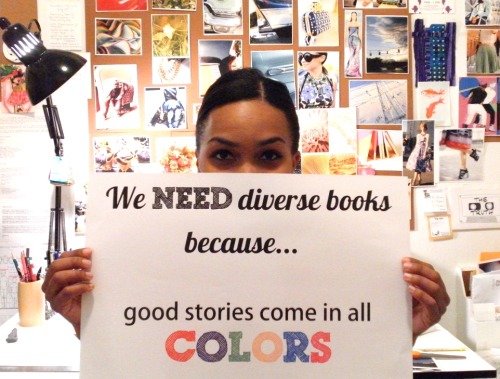
    We Need Diverse Books. Just four words that are filled with hope, longing and determination to ensure that books for kids and teens truly reflect the rich diversity of our nation. Today marks the end of what I hope is just the initial phase of the #WeNeedDiverseBooks campaign, and it's been incredibly inspiring to witness the outpouring of support from around the world for this effort. Blogger Joyce Valenza offers a good wrap-up of what's been happening so far, as does this L.A. Times article.

    There have been some great "next steps" proposed, such as this "white paper" prepared by librarian Jamie Campbell Naidoo for the Association for Library Service to Children, the children's division of the American Library Association. And there's also been a sharing of the resources highlighting what books are currently available that reflect a diversity of characters and setting in children's and teen books.

    More needs to be done, however. All of us need to make it clear to publishers that we DO want them to publish more children's and teen books featuring all kinds of diversity, including characters who are African-Americans, LBGT,  grappling with physical and mental challenges, etc., etc., etc. There are some publishers out there that already are doing this, publishers like Lee & Low, and we need to support them by buying their books for our collection and then USE them in Story Times, booktalks, displays, etc.  And we need to keep pushing awareness of why having diversity in children's and teen books is so important.

    It's a tall order, and it won't be easy. Some people think the problem will once again fade away into the background, just as it has done in years past. But I'm betting that this time is different. This time, with the help of the Internet, we've had such a groundswell of support from all kinds of people from all around the world, that I think the issue CAN'T fade away.

     I'm already inspired to do more, and have begun searching even harder for books that can expand the diversity of our library's collection, and I'm also planning to do more to use these books in programs.

    How about you? What are you doing to keep alive the message that #WeNeedDiverseBooks?